Ueno is one of Tokyo’s most culturally significant districts, known for its expansive park, major museums, historical temples, zoo, and dense network of traditional shopping streets.
Unlike Shinjuku or Shibuya, which are defined by commercial density and nightlife, Ueno is structured around public institutions, green space, and historic urban fabric.
It is one of the few districts in Tokyo where you can move from a national museum to a centuries‑old temple to a street‑market alley within minutes.
Ueno’s identity is built on three pillars:
- Ueno Park — Tokyo’s largest cultural park, home to museums, temples, and seasonal events.
- Ueno Station — a major transit hub connecting Tokyo to northern Japan.
- Ameya‑Yokocho (Ameyoko) — a dense, open‑air market street with food stalls, discount shops, and casual dining.
This guide provides a comprehensive, practical overview of Ueno’s structure, major attractions, museums, cultural sites, dining, shopping, navigation, accommodations, and practical considerations.
Plan your trip with this Tokyo itinerary (1–7 days)
For more ideas, explore: 15 Best Things To Do in Tokyo
1. District Structure
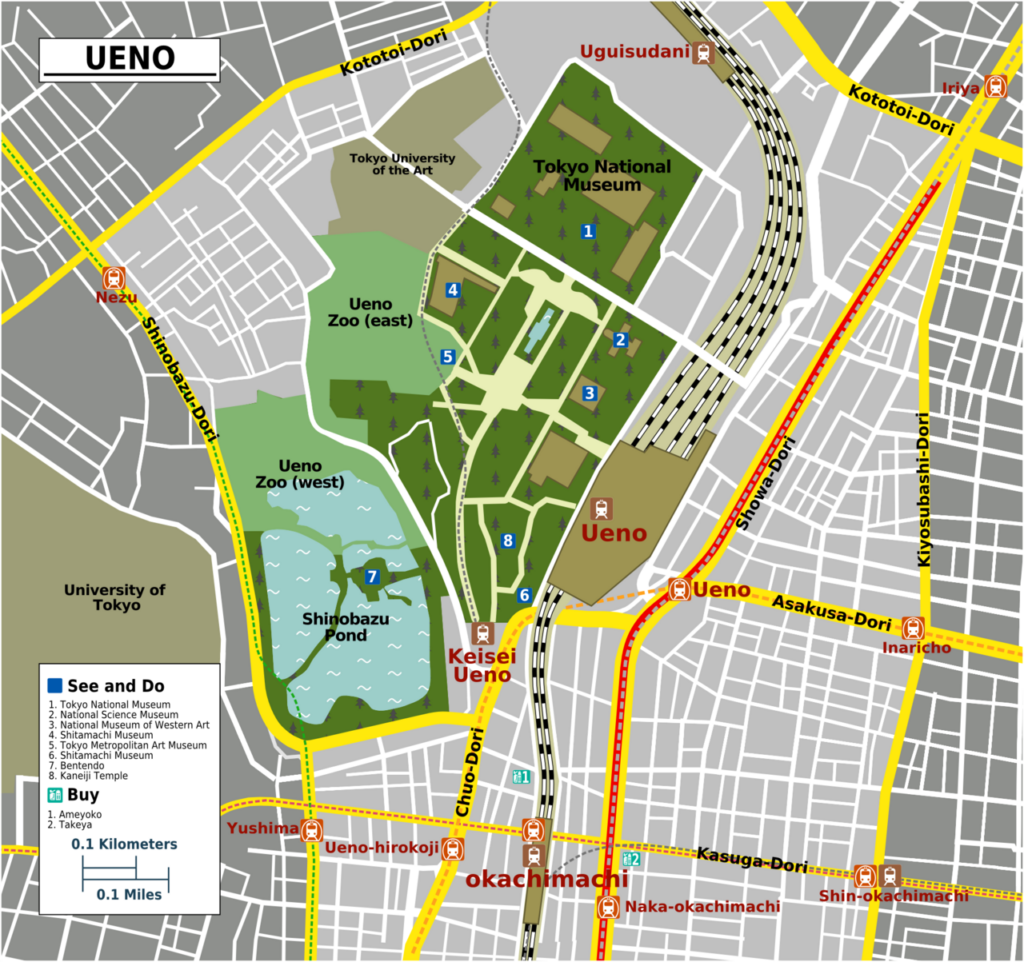
Ueno is organized around Ueno Park, one of Tokyo’s largest public parks and the city’s primary cultural district. The park sits directly above Ueno Station, making it easy to access from anywhere in Tokyo. South of the station lies Ameyoko, a dense market street that contrasts sharply with the open, green spaces of the park.
1.1 Ueno Park (Ueno Kōen)
Ueno Park is the heart of the district. It contains:
- Tokyo National Museum
- National Museum of Nature and Science
- Ueno Zoo
- Tokyo Metropolitan Art Museum
- National Museum of Western Art
- Shinobazu Pond
- Kaneiji Temple sites
- Seasonal cherry blossom paths
The park is large but walkable, with wide paths, clear signage, and multiple entrances. It functions as both a cultural hub and a recreational space.
1.2 Ueno Station Area
Ueno Station is a major transportation hub with connections to:
- JR Yamanote Line
- JR Keihin‑Tohoku Line
- JR Utsunomiya Line
- JR Takasaki Line
- JR Joban Line
- Shinkansen (Tohoku, Joetsu, Hokuriku)
- Tokyo Metro Ginza Line
- Tokyo Metro Hibiya Line
The station’s structure is layered, with multiple exits leading to different parts of the district. The Park Exit leads directly into Ueno Park, while the Central and Hirokoji exits lead toward Ameyoko and the commercial streets.
1.3 Ameya‑Yokocho (Ameyoko)
Ameyoko is a dense, open‑air market street running between Ueno and Okachimachi Stations. It contains:
- Food stalls
- Fresh produce vendors
- Discount shops
- Casual restaurants
- Clothing and accessory stores
Ameyoko is busy, loud, and energetic, offering a sharp contrast to the calm of Ueno Park.
1.4 Shinobazu Pond Area
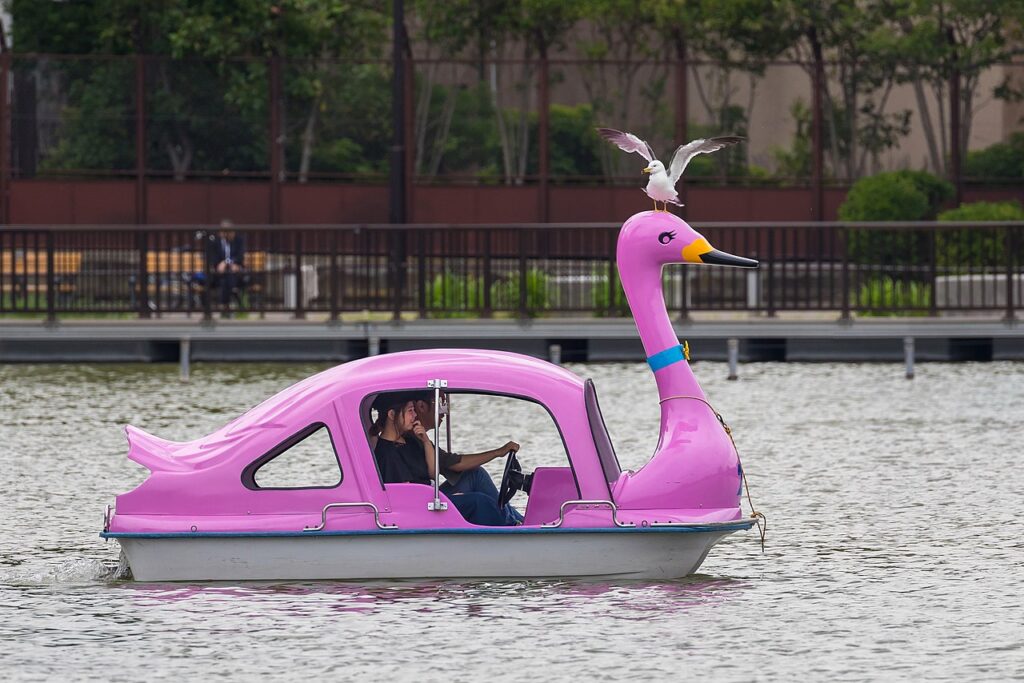
Located on the southwest side of Ueno Park, Shinobazu Pond is divided into three zones:
- Lotus Pond
- Boat Pond
- Cormorant Pond
The area includes Bentendo Temple and a boardwalk path. It provides a quieter, more scenic side of Ueno.
2. Major Attractions
Ueno’s attractions are concentrated in and around Ueno Park. The district is one of Tokyo’s most museum‑dense areas, making it ideal for travelers interested in culture, history, and art.
2.1 Tokyo National Museum (TNM)
The Tokyo National Museum is Japan’s oldest and largest museum, housing extensive collections of Japanese art, samurai armor, Buddhist sculpture, ceramics, textiles, and archaeological artifacts. The museum is divided into multiple buildings:
- Honkan (Japanese Gallery) — Japanese art and historical artifacts
- Toyokan — Asian art
- Heiseikan — archaeology and special exhibitions
- Hyokeikan — special exhibitions
- Gallery of Horyuji Treasures — Buddhist artifacts
The museum is large but well‑organized, making it easy to explore specific themes or periods.
2.2 National Museum of Nature and Science
This museum covers natural history, science, and technology. Exhibits include:
- Dinosaur skeletons
- Space exploration
- Japanese wildlife
- Human evolution
- Interactive science displays
It is one of Tokyo’s most family‑friendly museums.
2.3 Ueno Zoo
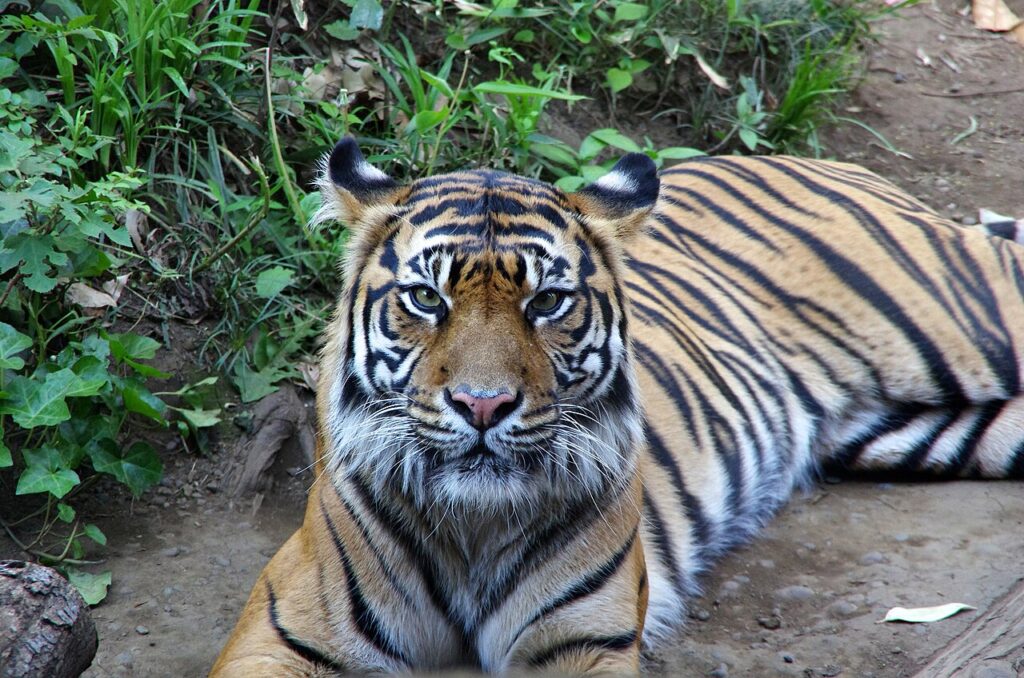
Ueno Zoo is Japan’s oldest zoo and contains:
- Giant pandas
- Elephants
- Tigers
- Gorillas
- A monorail connecting the east and west zones
The zoo is popular with families and can become crowded on weekends.
2.4 National Museum of Western Art
Designed by Le Corbusier, this museum houses European paintings and sculptures from the Renaissance to the early 20th century. The building itself is a UNESCO World Heritage Site.
2.5 Tokyo Metropolitan Art Museum
This museum hosts rotating exhibitions of Japanese and international art. It does not maintain a permanent collection, making each visit unique.
2.6 Kaneiji Temple Sites
Kaneiji was once one of the largest and most influential temples in Edo (Tokyo). Today, remnants include:
- Bentendo Temple (on Shinobazu Pond)
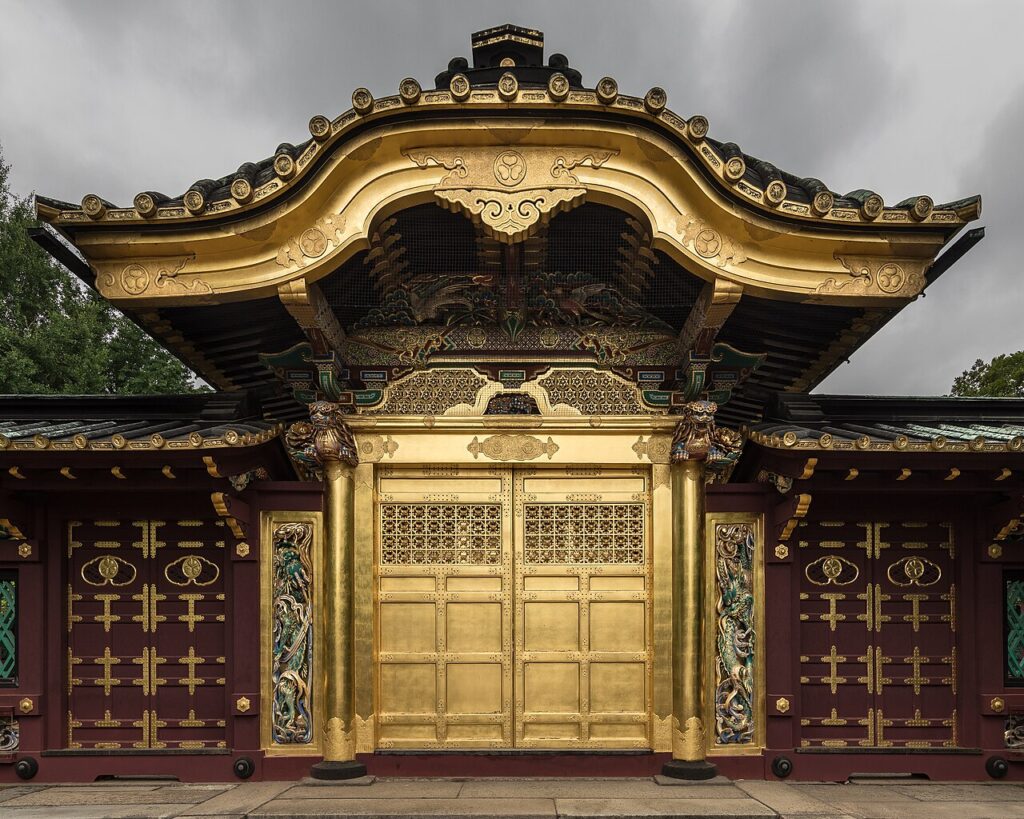
- Toshogu Shrine (dedicated to Tokugawa Ieyasu)
- Pagodas and smaller temple structures
These sites provide historical context for the district.
3. Museum Overview
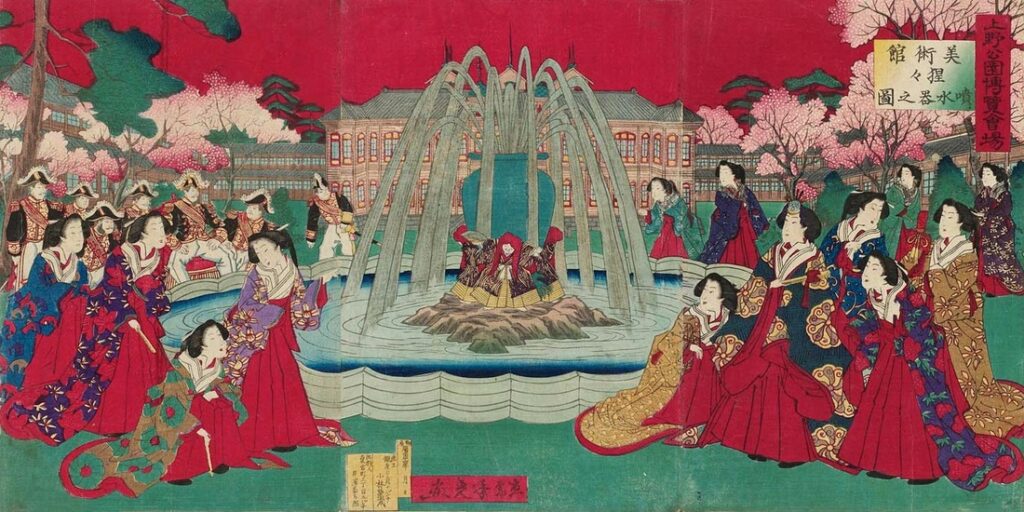
Ueno Museum Comparison Table
| Museum | Focus | Best For | Time Needed |
|---|---|---|---|
| Tokyo National Museum | Japanese & Asian art, archaeology | Culture, history, art | 2–4 hours |
| National Museum of Nature and Science | Natural history, science | Families, science enthusiasts | 2–3 hours |
| National Museum of Western Art | European art | Art lovers | 1–2 hours |
| Tokyo Metropolitan Art Museum | Rotating exhibitions | Contemporary art | 1–2 hours |
| Shitamachi Museum | Local history | Cultural context | 45–60 minutes |
This cluster makes Ueno one of the most museum‑dense districts in Tokyo.
Related Experience: Ueno Park & Tokyo National Museum Private Tour
4. Cultural & Historical Sites
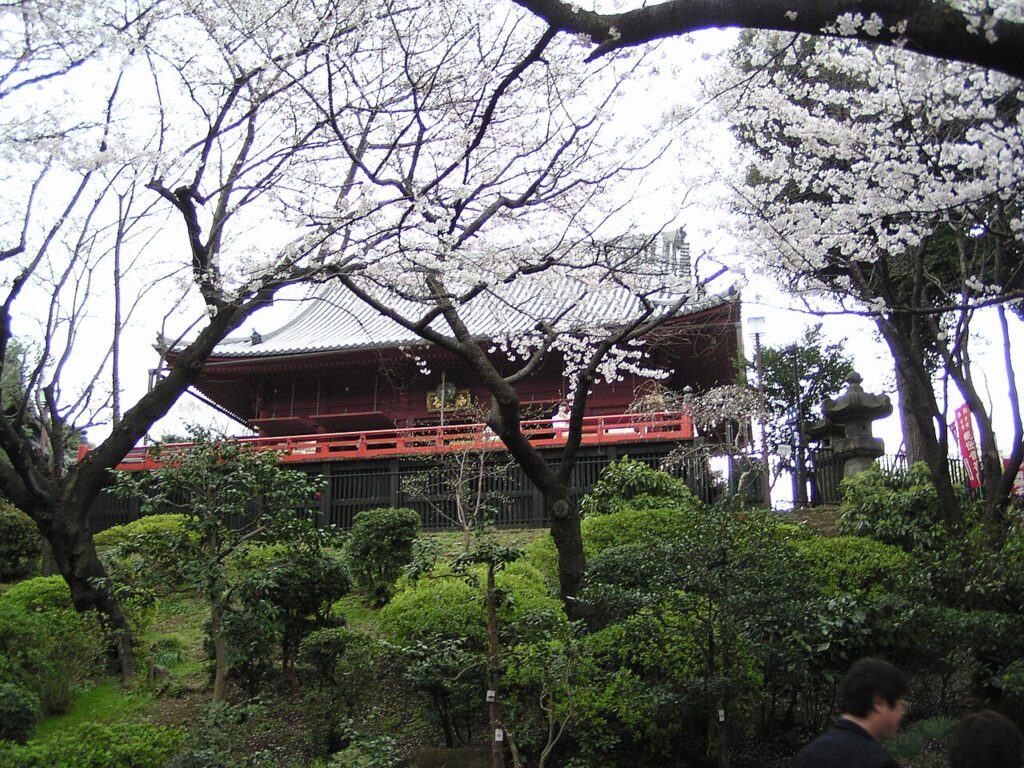
4.1 Ueno Toshogu Shrine
Dedicated to Tokugawa Ieyasu, this shrine features:
- Gold‑leaf decorations
- Stone lantern paths
- A five‑story pagoda (visible from the zoo)
It is one of the few Edo‑period structures in Tokyo that survived major fires and wars.
4.2 Bentendo Temple
Located on an island in Shinobazu Pond, Bentendo is dedicated to Benzaiten, the goddess of music and knowledge. The temple is surrounded by lotus fields in summer.
4.3 Shitamachi Museum
This small museum recreates life in Tokyo’s “shitamachi” (downtown) neighborhoods during the late 19th and early 20th centuries. Exhibits include:
- Merchant houses
- Traditional shops
- Everyday household items
It provides valuable context for understanding Tokyo’s cultural history.
Asakusa Travel Guide: Tokyo’s Historic District
4.4 Ueno Park Cherry Blossoms
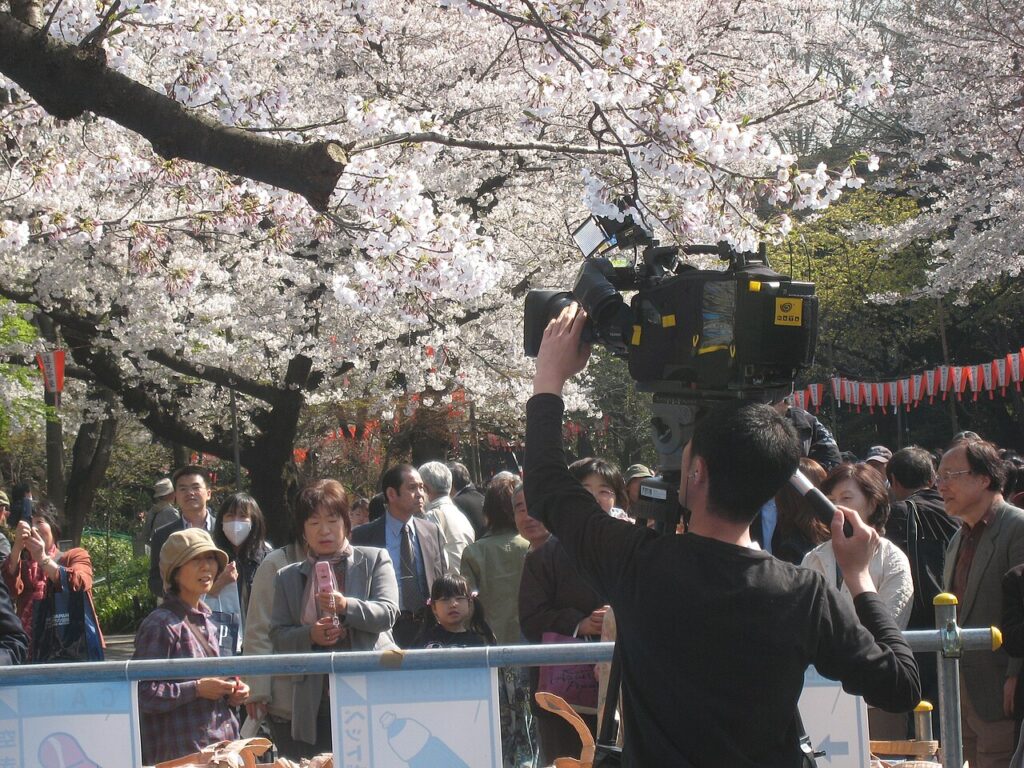
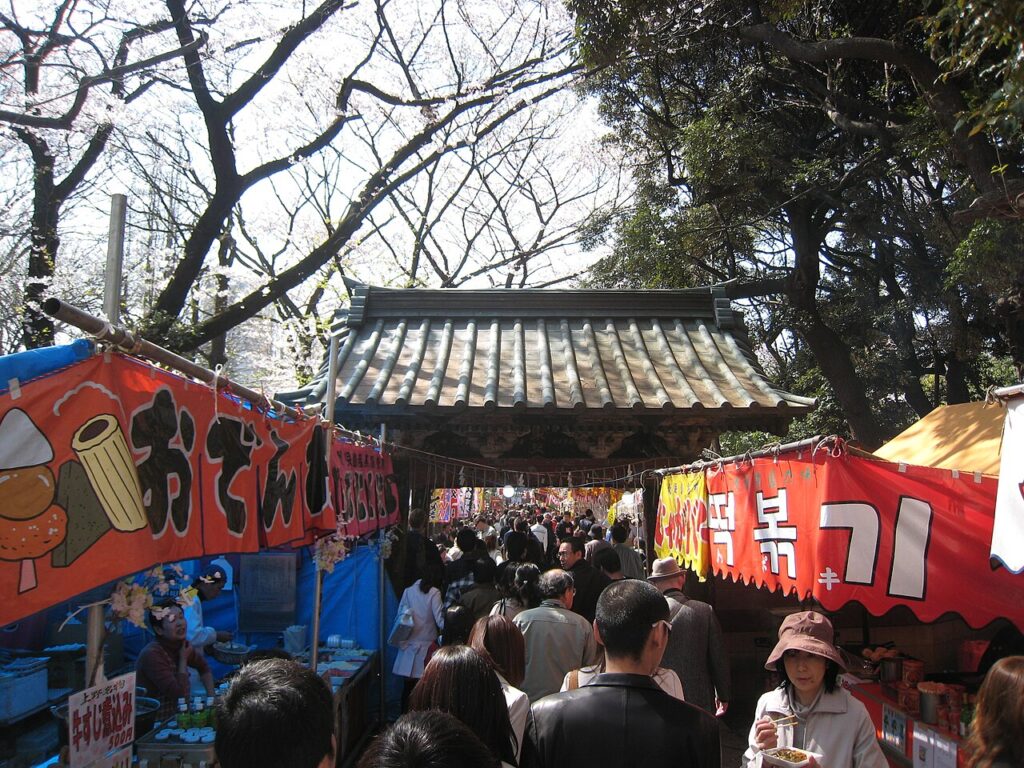
Ueno Park is one of Tokyo’s most famous cherry blossom spots. During peak season, the central path becomes a major hanami (flower‑viewing) area with food stalls and large crowds.
Related Experience: Cherry Blossom Private Tour
5. Dining in Ueno
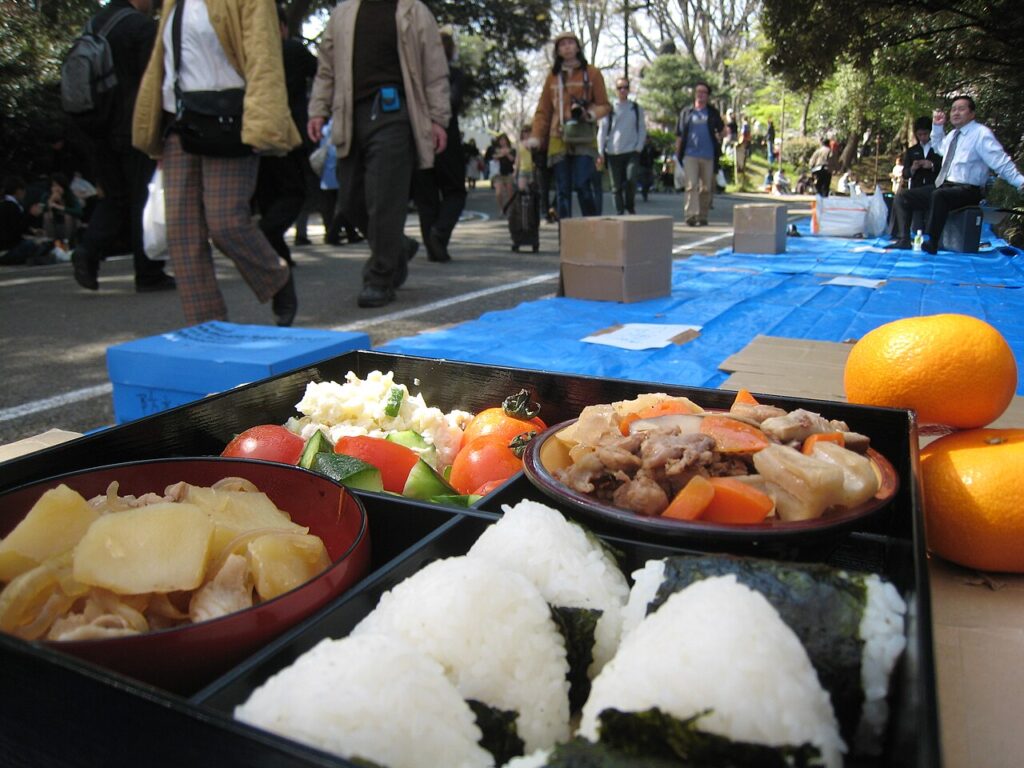
Ueno’s dining scene is diverse, ranging from traditional Japanese restaurants to casual market stalls.
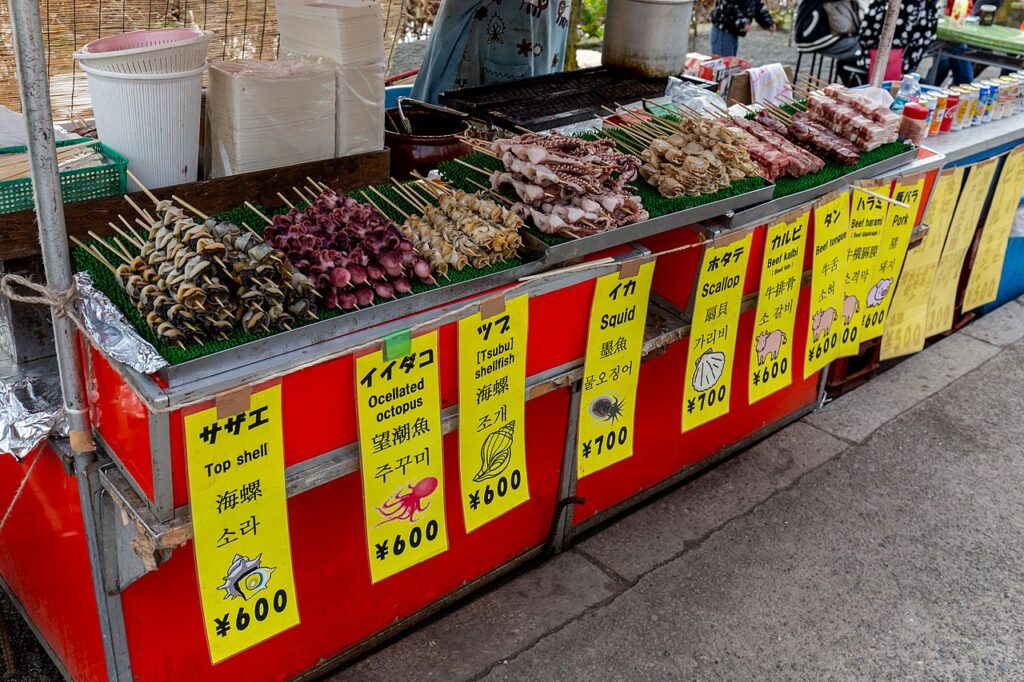
5.1 Dining in Ameyoko
Ameyoko is one of the best places in Tokyo for casual, affordable dining. Options include:
- Grilled seafood stalls
- Yakitori (grilled chicken skewers)
- Ramen shops
- Curry restaurants
- Izakayas
- Fruit vendors
- Snack stalls
The atmosphere is lively and informal.
Best Food Experiences in Tokyo
5.2 Traditional Japanese Restaurants
Around Ueno Park and the station, you’ll find restaurants specializing in:
- Sushi
- Tempura
- Tonkatsu
- Soba and udon
- Kaiseki‑style meals
These venues offer a more structured dining experience than Ameyoko.
5.3 Cafés and Museum Dining
Several museums have cafés or restaurants with:
- Light meals
- Coffee and tea
- Seasonal desserts
These are convenient for breaks during museum visits.
5.4 Ueno Station Dining
Inside and around the station, you’ll find:
- Bento shops
- Convenience stores
- Fast‑casual chains
- Coffee shops
These are ideal for quick meals before or after exploring the district.
Related Experience: Ueno Ameyoko Food Tour →
6. Shopping Overview
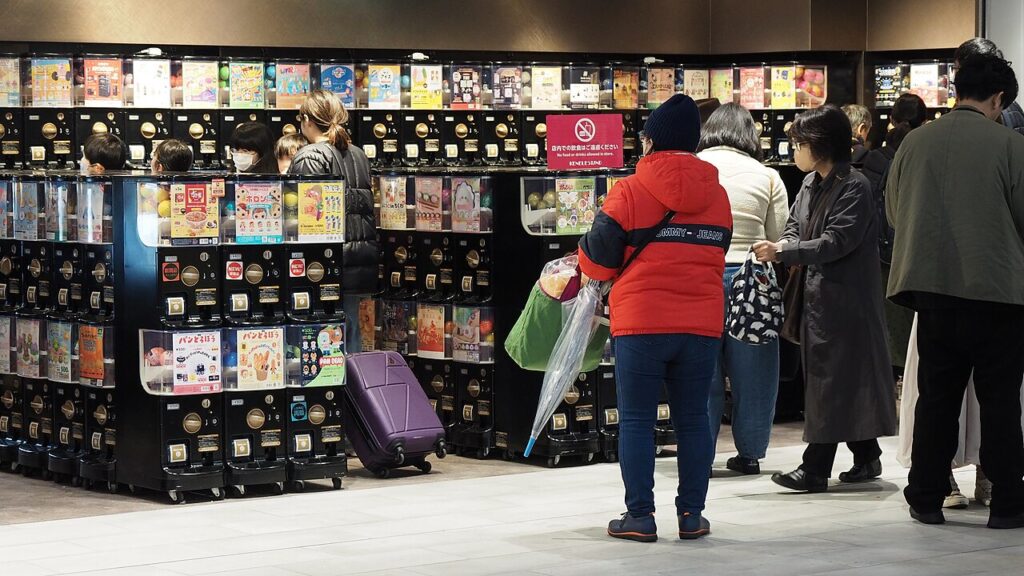
Ueno’s shopping environment is defined by Ameyoko and the commercial streets around the station.
6.1 Ameyoko Market
Ameyoko is a dense, open‑air market street offering:
- Clothing
- Shoes
- Cosmetics
- Snacks
- Dried goods
- Seafood
- Street food
Prices are generally lower than in major department stores.
6.2 Ueno Station Shopping
Inside the station, you’ll find:
- Souvenir shops
- Bento stands
- Convenience stores
- Small boutiques
These are practical for last‑minute purchases.
6.3 Ueno Park Shops
Near the museums, small shops sell:
- Art prints
- Museum merchandise
- Books
- Traditional crafts
These items are higher quality and more curated than typical souvenirs.
Ginza Travel Guide: Tokyo’s Luxury Shopping
7.1 Train and Subway Access
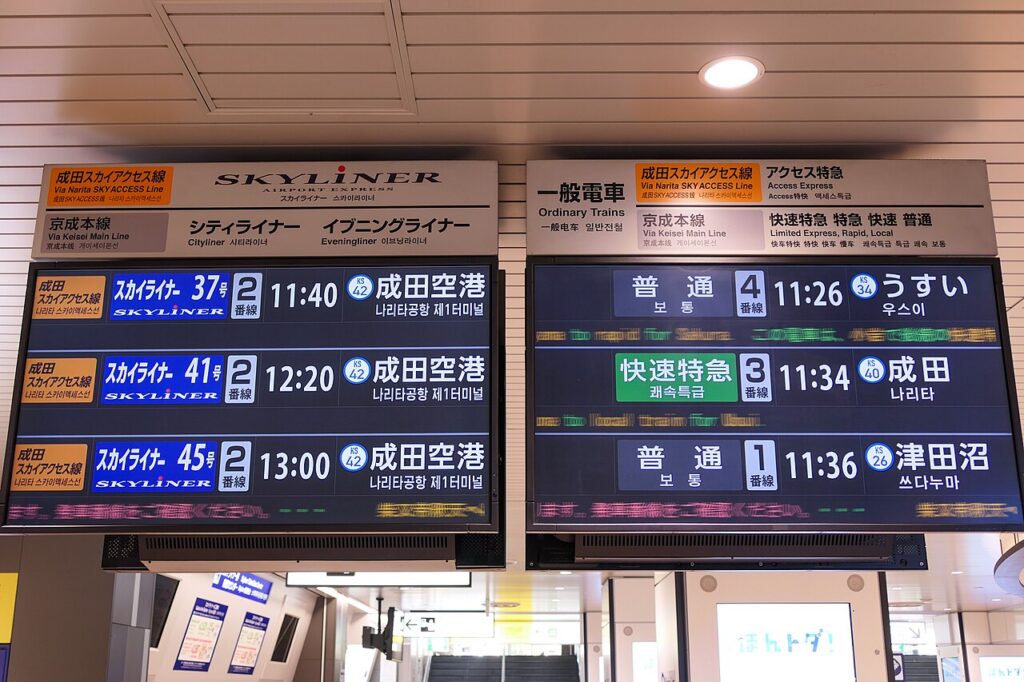
Ueno Station is served by:
- JR Yamanote Line
- JR Keihin‑Tohoku Line
- JR Utsunomiya Line
- JR Takasaki Line
- JR Joban Line
- Shinkansen (Tohoku, Joetsu, Hokuriku)
- Tokyo Metro Ginza Line
- Tokyo Metro Hibiya Line
This makes Ueno a major gateway to northern Japan.
Public Transit in Tokyo How to Navigate
7.2 Key Exits
- Park Exit: Direct access to Ueno Park and museums
- Central Exit: Access to Ameyoko and commercial streets
- Hirokoji Exit: Access to restaurants and shops
Choosing the correct exit saves time and reduces backtracking.
7.3 Walking Routes
A simple walking route for first‑time visitors:
- Start at Park Exit
- Explore Tokyo National Museum
- Walk through Ueno Park
- Visit Ueno Zoo or another museum
- Exit toward Ameyoko
- Explore the market street
- Return to Ueno Station via Central Exit
This route covers the district’s major zones efficiently.
8. Where to Stay in Ueno
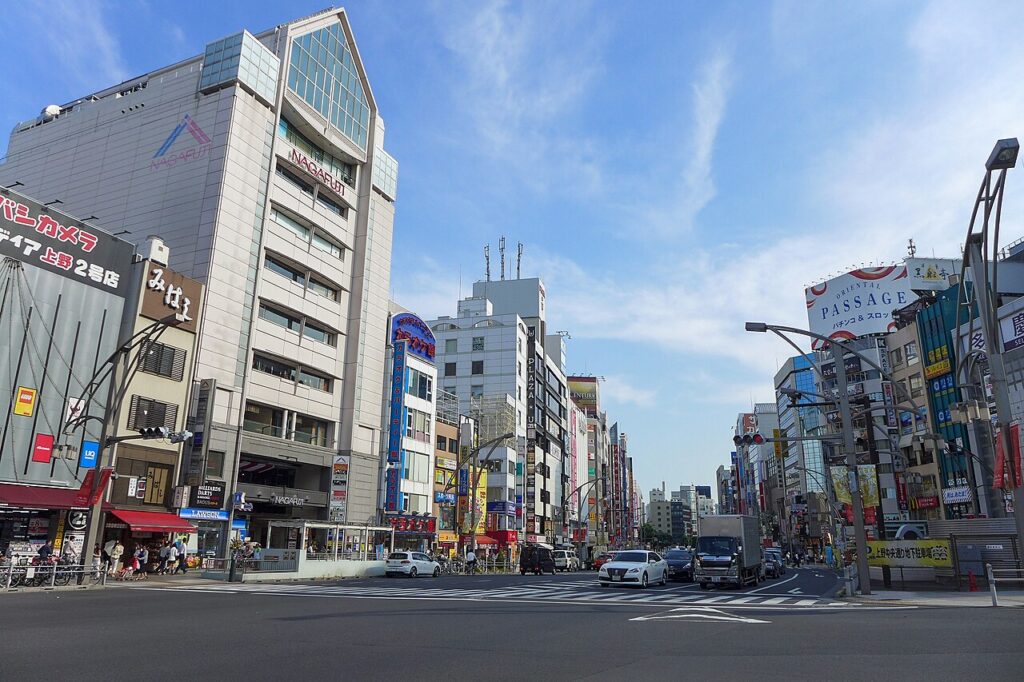
Ueno is a practical base for travelers seeking cultural attractions, easy transportation, and access to northern Tokyo.
8.1 Why Stay in Ueno?
- Direct access to multiple museums
- Easy access to Asakusa, Akihabara, and Tokyo Station
- Shinkansen connections
- Affordable hotels
- Good dining and shopping options
Ueno is quieter than Shinjuku or Shibuya but more active than Asakusa.
8.2 Best Areas to Stay
- Near Ueno Station: Most convenient for transportation
- South toward Okachimachi: Closer to Ameyoko and shopping
- Near Ueno Park: Quieter, scenic, close to museums
8.3 Hotel Types
Ueno offers:
- Business hotels
- Mid‑range modern hotels
- Boutique hotels
- Occasional traditional inns
Prices are generally lower than in central Tokyo districts.
Related Stay: Hotels in Ueno
9. Practical Tips
9.1 Best Time to Visit
- Spring: Cherry blossoms
- Autumn: Fall foliage
- Weekdays: Less crowded museums
- Weekends: More activity in Ameyoko
9.2 Museum Planning
- Some museums require timed tickets
- Special exhibitions may have separate fees
- Museums are closed on certain weekdays (varies by institution)
9.3 Dining Tips
- Ameyoko is best for casual meals
- Museum cafés are convenient but can be crowded
- Traditional restaurants near the park offer quieter dining
9.4 Accessibility
- Ueno Park has wide, paved paths
- Museums are generally accessible
- Ameyoko’s narrow alleys can be crowded
Ueno is one of Tokyo’s most culturally rich districts, offering a concentrated mix of museums, historical sites, green spaces, and market streets.
With clear navigation, diverse attractions, and strong transportation links, Ueno is a practical and rewarding destination for travelers seeking depth and variety in their Tokyo itinerary.
Start planning your trip with this Tokyo itinerary (1–7 days)